Frame Engine for IFC: A Power BI Report in the Free Plan
Process an IFC file with Frame's engine, explore it in the included viewer, and start a Power BI report from the Free plan's IFC starter template.

Frame Team
We have been testing a workflow that starts with a plain IFC file and ends with a Power BI report that still understands the model behind the numbers.
The important part is what happens between those two files. Frame now has a dedicated engine for IFC processing, so an IFC upload can produce the model data, report artifacts, and viewer context needed for the next step in the workflow.
That path is now available in the Free plan.
What the Free plan includes for IFC
The Free plan includes:
- one model slot
- one Power BI report slot
- the IFC starter template for an IFC processed by the Frame engine
- the Frame viewer for inspecting model objects alongside the report
The engine choice matters. The included Power BI analytics path is designed for IFC files processed by Frame’s engine. IFC files translated through the Autodesk Platform Services path, along with Revit and Navisworks models, follow their own upload and credential requirements and are not interchangeable with this starter report.
This gives a small team a concrete way to try model analytics without first setting up an Autodesk translation workflow.
From IFC upload to Power BI
The workflow is short enough to use during a real project review.
1. Choose the Frame engine
Upload an .ifc file in the Frame dashboard and select the Frame engine when
the translation options appear. The file is processed into the model data and
viewer artifacts that the report workflow needs.
2. Wait for the model to become ready
When processing is complete, the model is available in the dashboard with its properties and object structure. This is the useful checkpoint: the report is based on the processed model, not on a raw file that Power BI has to interpret itself.
3. Download the IFC starter template
Open the report template dialog for the model and choose IFC Starter Template. The template includes the Frame viewer and a report structure that can be connected to the model’s prepared analytics data.
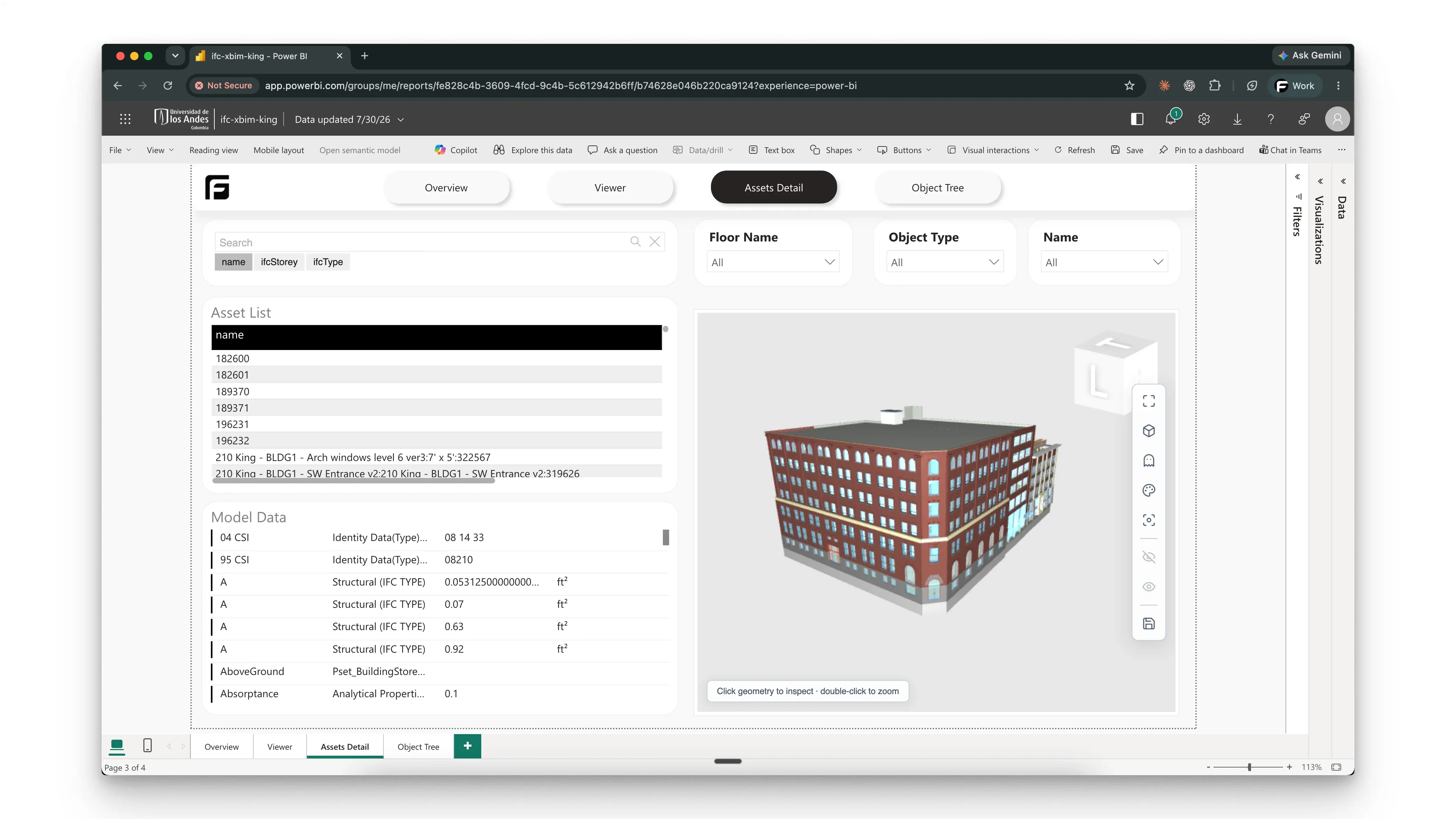
The IFC starter report keeps model assets, properties, filters, and the 3D viewer together in Power BI.
4. Review the model in context
The report is most useful when the table and the viewer stay together. A model selection can help explain a count or category, while a chart or filter can give the reviewer a smaller set of objects to inspect in 3D.
That is the handoff we wanted from the beginning: a dashboard number should still lead back to the model objects that produced it.
What to look at in the starter report
The starter report is a base for practical IFC review, not a finished project dashboard. It gives you a place to begin with:
- model assets and their properties
- object categories and building-storey context
- filters for narrowing a review set
- a 3D viewer for checking the selected objects
- Power BI pages that you can extend with cost, schedule, or project data
The prepared tables are especially useful for teams that do not want to build an IFC parser or reshape an export before every meeting. The report can start from the model data Frame has already organized, then grow around the team’s own review questions.
A clear boundary for the first release
This is intentionally a focused first workflow.
The Free plan’s Power BI slot and IFC starter template work with IFC models processed by the Frame engine. They do not provide Power BI analytics for Autodesk-translated models on the same plan. Excel support for Frame-engine IFC models is also still coming.
Being explicit about that boundary makes the template easier to trust. If the goal is an IFC report with the included viewer, choose the Frame engine at upload time and keep the report tied to that model.
What we want to test next
The first useful test is not another demo file. It is a messy project IFC with the naming, storeys, and property gaps that show up in normal coordination work.
That is where the starter report should earn its place: when a reviewer can move from a Power BI filter to a real set of model objects, understand what changed, and decide what needs attention next.
If you have an IFC file ready, start with Frame’s free plan and try the Frame-engine upload path.